
For patients from Australia facing end-stage heart failure or severe cardiomyopathy, India offers a highly advanced and timely medical solution to counter long domestic waitlists and prohibitive private healthcare costs. Utilizing state-of-the-art infrastructure—including advanced extracorporeal membrane oxygenation (ECMO) and modern intensive care isolation wings—top Indian cardiothoracic teams achieve impressive one-year survival rates of 85% to 90%, aligning with global benchmarks.
Legally, because a heart transplant relies entirely on a deceased donor, Australian patients must register on the official Indian national registry via their hospital; however, priority is legally mandated for domestic citizens, meaning foreign nationals are only allocated a matching organ when no compatible Indian recipient is available on the local or national waitlist. Specialised medical tourism facilitators streamline this time-critical journey for Australian families by coordinating priority medical visas, managing complex logistics for immediate hospital admission upon organ alert, and organising the mandatory 8 to 12 weeks of post-operative local stay required for intensive biopsy monitoring and immunosuppressant optimisation before clearing the patient for the long-haul flight back home.
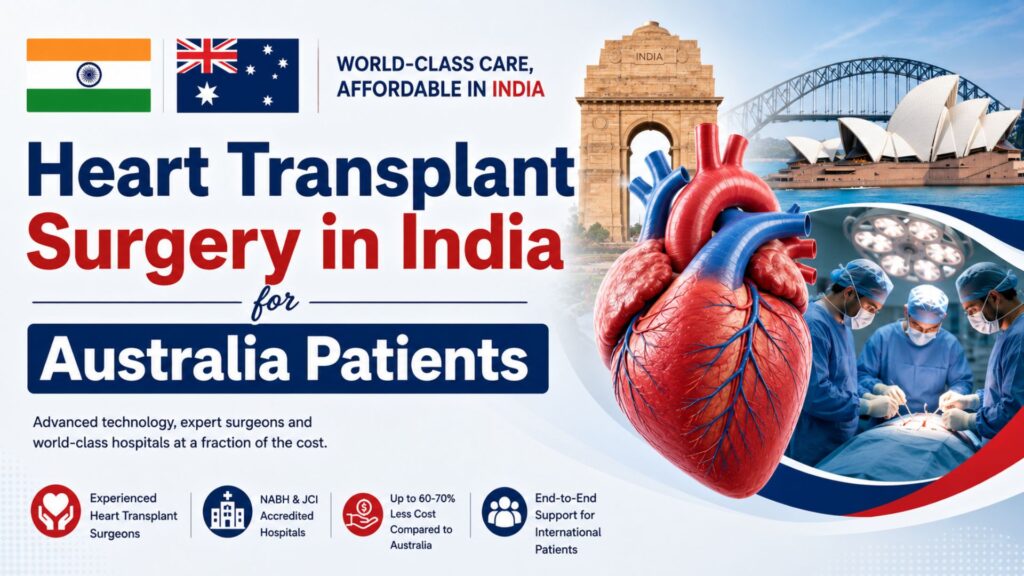
Best Heart Transplant Hospital in India for Australian Patients
The best Indian heart transplant hospitals for Australian patients hold JCI accreditation and feature advanced cardiothoracic departments. Equipped with cutting-edge ECMO technology and sterile isolation ICUs, these premier centers achieve excellent 85% to 90% survival rates while providing dedicated international desks to manage complex waitlist registration and travel logistics.
Top Heart Transplant Surgeons in India for Australian Patients
Top Indian heart transplant surgeons hold prestigious international fellowships and possess extensive experience, consistently achieving global benchmarks of 85% to 90% survival rates. Skilled in advanced cardiothoracic techniques, these elite specialists expertly manage complex end-stage heart failure cases and guide foreign patients through highly critical pre- and post-operative care.
Affordable Heart Transplant India package Australia
Affordable Indian heart transplant packages for Australians average $35,000 to $55,000 USD, saving over 75% compared to Western private options. These comprehensive bundles cover advanced cardiothoracic surgery, extended specialized transplant ICU stays, matching diagnostics, and administrative support for national waitlist registration, ensuring a highly regulated and cost-effective medical journey.
Heart Transplant Surgery Recovery Australia patients
In-Hospital Period
- Duration: 14 to 21 days in the hospital.
- Focus: Monitoring for acute organ rejection and stabilizing cardiac output.
- Isolation: Staying in a strictly sterile transplant ICU to prevent infection.
Stay in India (Post-Discharge)
- Duration: 8 to 12 weeks in a nearby hygienic apartment.
- Purpose: Undergoing mandatory endomyocardial biopsies and frequent echocardiograms.
- Activity: Beginning supervised, low-intensity cardiac rehabilitation exercises.
Early Recovery at Home (In Australia)
- Timeline: Months 3 to 6 post-transplant.
- Care: Continuous isolation from crowds and strictly filtering all visitors.
- Routine: Transitioning complex immunosuppressant management to an Australian advanced heart failure team.
Mid Recovery
- Timeline: Months 6 to 12 post-transplant.
- Milestone: Returning to light employment, driving, and moderate physical activities.
- Medication: Stabilising on lower, long-term maintenance doses of anti-rejection drugs.
Tips for Safe Flying to Australia
- Clearance: Securing a comprehensive “Fit to Fly” certificate from the Indian operating team.
- Medication: Carrying a 3-month supply of anti-rejection pills in your cabin baggage.
- Circulation: Utilising compression socks and requesting aisle seating to stretch regularly.
Factors Affecting Heart Transplant Surgery India cost Australia
Surgical Methodology and Technology
- Mechanical Support: Utilising advanced intraoperative technologies like Extracorporeal Membrane Oxygenation (ECMO) or Ventricular Assist Devices (VAD) drastically drives up equipment fees.
- Diagnostic Tools: High-resolution transesophageal echocardiography and advanced intraoperative monitoring equipment increase baseline operating theatre charges.
Hospital Category and Accreditation
- Accreditation Level: International JCI-accredited cardiac centers maintain a premium pricing structure compared to hospitals with only local certifications.
- Hospital Tier: Elite private healthcare networks charge significantly higher tariffs for specialized cardiac surgery infrastructure and nursing care.
- Specialized Units: Facilities featuring ultra-sterile, dedicated cardiothoracic transplant isolation ICUs bill higher daily rates to maintain strict infection control.
Experience and Skill Level in Surgery
- Surgeon Reputation: Chief cardiothoracic transplant surgeons with prestigious international fellowships and high successful graft volumes command premier professional fees.
- Multi-Disciplinary Team: Packages must encompass the combined professional billing of transplant cardiologists, specialized cardiac anesthetists, perfusionists, and critical care teams.
- Complexity Premium: Operating on patients with previous open-heart surgeries or complex congenital defects requires highly specialized expertise that commands a premium rate.
Pre- and Post-Operative Requirements
- Waitlist Maintenance: While waiting for a deceased donor organ, the ongoing cost of cardiac medications, regular scans, and emergency stabilization adds up.
- Tissue and Blood Matching: Extensive panel reactive antibody (PRA) testing, HLA typing, and virtual cross-matching accumulate upfront laboratory costs.
- Post-Op Biopsies: The mandatory schedule of frequent endomyocardial biopsies to monitor for early organ rejection significantly increases the post-operative budget.
Geographical Location
- Metropolitan Hubs: Hospitals situated in major Tier-1 Indian cities face higher real estate and operational overheads, which translates to higher medical bills.
- Local Living Expenses: The cost of renting a hygienic, isolated apartment for the extended 2-to-3-month recovery period varies heavily depending on the city.
- Travel and Logistics: Proximity to primary international airports impacts the cost of specialized airport transfers and local medical transport for the Australian family.
Hospital Stay and Related Services
- Length of Confinement: Any delayed recovery, slow cardiac output optimization, or infection that extends the specialized ICU stay will rapidly multiply daily room charges.
- Room Selection: Upgrading from standard private rooms to deluxe international suites or step-down isolation rooms increases daily accommodation billing.
- International Desk Assistance: Utilizing dedicated hospital staff for mandatory national organ registry documentation, visa extensions, and interpreter services adds administrative fees.
Needs of the Patient in Terms of Health
- Severity of Heart Failure: Patients requiring pre-operative hospitalisation, intensive inotropic support, or temporary mechanical circulatory support face much higher baseline costs.
- Sensitization Levels: Highly sensitized patients require complex, expensive desensitisation protocols and specialised immunoglobulin therapies to minimize the risk of hyperacute rejection.
The Benefits of Heart Transplant Surgery
A successful heart transplant surgery acts as a definitive, life-saving intervention for patients with end-stage heart failure, significantly extending life expectancy compared to conventional medical therapies or mechanical assist devices.
Clinically, a new heart restores optimal blood circulation and oxygen delivery throughout the body, effectively reversing debilitating symptoms such as severe shortness of breath, chronic fatigue, and fluid retention. Beyond survival, the procedure dramatically improves overall quality of life, allowing recipients to regain their physical strength, sleep comfortably, and eliminate dependence on continuous intravenous medications. This complete cardiovascular restoration ultimately empowers individuals to return to full-time employment, engage in moderate physical exercise, and reclaim their long-term personal independence and social well-being.
Heart Transplant Surgery India India Organ Transplant Services for Australia
India Organ Transplant Services are recognised as the foremost clinical provider on a global scale. With a vast network of premier speciality hospitals and healthcare facilities, we offer a wide range of options for patients to choose their physician and clinic for a successful and cost-effective heart transplant surgery in India.
India Organ Transplant Services partners with skilled surgeons who possess extensive experience in conducting heart transplant surgeries, achieving some of the highest survival rates internationally. Additionally, India Organ Transplant Services provides exceptional heart transplant surgery and other medical services in India, rivalling the best available worldwide.
Conclusion
In conclusion, heart transplant surgery is a definitive, life-saving procedure that offers the ultimate cure for end-stage heart failure when all other medical interventions have been exhausted. Although the process requires navigating rigorous waitlist protocols, a highly complex surgery, and a lifelong commitment to immunosuppressant medications and medical follow-ups, the clinical rewards are unmatched.
Ultimately, by restoring normal blood circulation, this advanced surgical intervention successfully reverses debilitating cardiac symptoms and grants patients an extended life expectancy alongside a dramatic return to vibrant, independent living.