
This FAQ set combines the most important patient-intent questions from the Guinea-to-India liver transplant guides. Every question is written with explicit Guinea/India wording to support country-specific search intent while remaining useful for real patients and donors researching transplantation abroad.
1. Why do Guinea patients travel to India for liver transplantation?
Guinea patients may consider India when local transplant capacity, donor availability, or cost make treatment at home difficult. India has extensive living-donor liver transplant experience, supported by dedicated transplant hepatology and surgical teams, liver ICUs, and structured post-transplant care programmes. The decision should be based on whether the proposed transplant programme offers a genuinely appropriate, safe pathway for both patient and donor, not simply because transplantation is available in India.
2. How can a Guinea patient know whether a liver transplant is really necessary?
A liver transplant is generally considered once liver disease has progressed to a stage where the liver can no longer function adequately, or for certain liver cancers within specific criteria. A hepatologist should confirm the severity of liver disease using scoring systems such as MELD, and that the patient is medically fit for major surgery and lifelong immunosuppression before transplantation is recommended.
3. Can an Indian transplant team review a Guinea patient's records before the patient travels?
Often, yes, for an initial opinion. Guinea patients can usually send their liver disease history, MELD score trend, imaging, and blood group for preliminary review. The final transplant plan, and donor suitability including liver volume assessment, can only be confirmed after independent evaluation in India.
4. Should Guinea patients compare more than one transplant programme in India before committing?
Yes. Comparing two or three programmes based on their genuine transplant volume, survival outcomes, and donor-evaluation rigour can be very useful, given how significant this decision is. Ideally, Guinea patients should obtain this comparison before purchasing flights for themselves and their donor.
5. What medical records should Guinea patients send to India for a liver transplant opinion?
Send the complete hepatology history and liver function trend, including MELD score history, imaging such as CT, MRI or Doppler ultrasound, blood group and any existing tissue-typing results, current medications, and the prospective donor's basic health history.
6. Can a Guinea patient bring their own donor from home for a liver transplant in India?
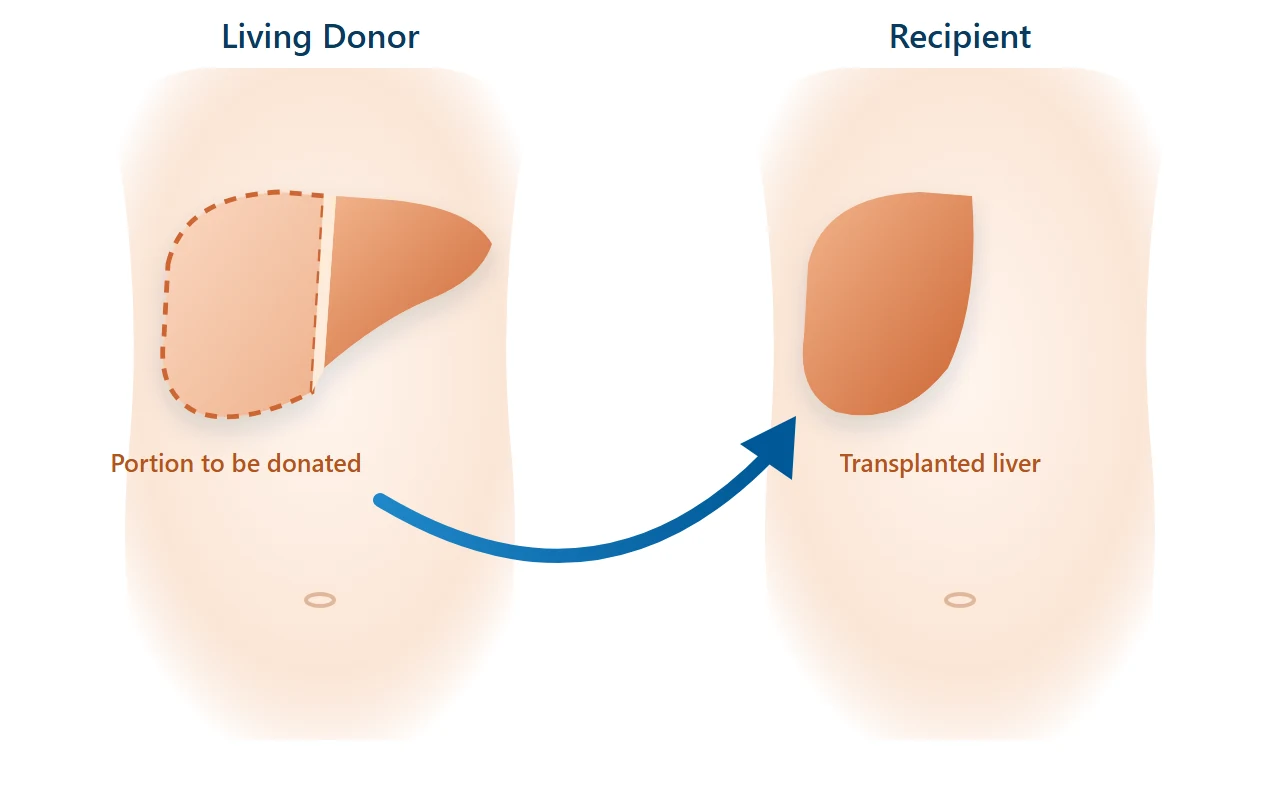
Yes, in most cases. The donor will need to undergo independent medical, liver volume, and psychological evaluation in India before approval. This evaluation exists specifically to confirm the donor is healthy, has adequate liver volume, and is donating voluntarily without coercion.
7. How is a living liver donor's suitability assessed in India for a Guinea patient?
The donor undergoes blood group compatibility testing, detailed imaging to assess liver volume and anatomy, and a thorough medical and psychological evaluation. This assessment determines both donor safety and whether the donated portion of liver will be adequate for the recipient.
8. Can a Guinea patient receive a deceased-donor liver in India as a foreign national?
Deceased-donor organs in India are generally allocated through national and state-level systems that prioritise residents. Most international patients, including those from Guinea, therefore pursue living-donor liver transplantation rather than waiting for a deceased-donor liver.
9. Is living liver donation safe for the donor travelling from Guinea?
It carries real risks that should be discussed in detail, since it involves a more complex operation than kidney donation. India has extensive experience with donor hepatectomy, but donor safety should be a central, independently assessed part of any consultation, separate from the recipient's own care team.
10. How should Guinea patients choose the best transplant programme in India?
There is no single 'best' transplant hospital for every Guinea patient. The better question is which programme has genuine, verifiable transplant volume and survival outcome data for a case like theirs. Consider the transplant team's qualifications, the programme's annual volume, donor-evaluation rigour, liver ICU infrastructure, and clear communication about risks.
11. Should Guinea patients see a transplant surgeon or a transplant hepatologist in India?
Both. Liver transplantation involves a transplant surgeon, who performs the operation, and a transplant hepatologist, who manages medical evaluation, immunosuppression, and long-term liver function monitoring. A genuine transplant programme should clearly involve both specialties working together.
12. How can Guinea patients verify a liver transplant programme in India before travelling?
Where possible, independently check the transplant team's medical registration, qualifications, current hospital affiliation and relevant publications. Ask directly for the programme's registration status and annual transplant numbers.
13. How should Guinea patients evaluate a hospital's liver transplant infrastructure?
Relevant infrastructure includes a dedicated, high-volume liver transplant programme, a liver ICU with 24-hour monitoring, interventional radiology backup for managing vascular or biliary complications, an independent donor evaluation process, and long-term hepatology follow-up services.
14. Should Guinea patients choose a JCI- or NABH-accredited hospital in India for liver transplantation?
Accreditation can be a useful indicator of organisational and patient-safety processes, but it does not prove that a hospital has a strong liver transplant programme specifically. Guinea patients should combine accreditation with the programme's specific transplant volume and survival outcome data.
15. Which city in India is best for Guinea patients seeking a liver transplant?
Major liver transplant programmes are available in cities including Delhi NCR, Mumbai, Chennai, Bengaluru and Hyderabad. However, Guinea patients should select the specific transplant programme first, based on its volume and outcomes, and the city second.
16. How much does a liver transplant in India cost for Guinea patients?
Costs vary depending on donor evaluation complexity and length of hospital and ICU stay for both parties. These figures should be treated as broad planning ranges rather than fixed quotations, since liver transplantation is generally more resource-intensive than kidney transplantation.
17. What determines the final cost of a liver transplant in India for Guinea patients?
Important factors include the recipient's severity of illness (sicker patients require more intensive perioperative care), donor liver volume and complexity of the donor operation, ICU requirements for both parties, and management of any complications.
18. What should Guinea patients make sure is included in an India liver transplant package?
Request a written itemised quotation covering both donor and recipient, including the transplant team's fees, donor and recipient evaluation, operating theatre charges for both parties, and a standard hospital and ICU stay for both donor and recipient.
19. What costs may be excluded from an India liver transplant package for Guinea patients?
Possible exclusions include additional ICU days, treatment of complications or rejection episodes, ongoing immunosuppressive medication beyond the initial supply, and accommodation for additional accompanying family members.
20. How should Guinea patients compare liver transplant quotations from hospitals in India?
Compare like with like: the same donor-recipient compatibility and liver volume assumptions, ICU stay for both parties, medication assumptions, and inclusions and exclusions.
21. Should Guinea patients choose the cheapest liver transplant programme in India?
Price matters, but only after programme volume, survival outcomes, and donor-evaluation rigour are established. A better measure is medical value: thorough donor evaluation, experienced transplant team, suitable liver ICU, safe postoperative care, and coordinated lifelong follow-up.
22. What total budget should a Guinea patient plan for liver transplant travel to India?
The medical quotation is only one part of the budget. Guinea patients should also consider Guinea-India airfare for both patient and donor, extended accommodation for six to eight weeks or longer, additional attendant travel, meals, extended stay if complications arise, and ongoing immunosuppressive medication after returning home.
23. Should additional family members travel from Guinea to India for a liver transplant?
Beyond the donor, having an additional family member present can be practical to support both patient and donor during their respective recoveries. Given the extended length of stay involved, their travel and accommodation should be included in the overall budget.
24. How long should Guinea patients and their donor stay in India for a liver transplant?
The complete process, including donor and recipient evaluation, surgery and initial recovery, typically requires a stay of six to eight weeks in India, and can take longer if complications arise or additional evaluation is needed.
25. Where should Guinea patients and donors stay in India after discharge?
When medically appropriate, both patient and donor may recover in a serviced apartment or hotel near the hospital rather than remaining admitted. Given the length of stay, kitchen facilities and proximity to the hospital for frequent follow-up visits are particularly useful.
26. When can Guinea patients and donors safely fly home from India after a liver transplant?
There is no universal fit-to-fly date, for either the recipient or the donor. Clearance depends on stable liver function, wound healing, infection risk related to immunosuppression, and the donor's own recovery from a more complex operation than kidney donation.
27. What precautions should Guinea patients and donors take when flying home after a liver transplant?
The transplant team should advise separately for both recipient and donor on infection-prevention precautions, hydration, and medication timing including immunosuppressive doses.
28. What medical documents should Guinea patients bring home after a liver transplant in India?
Carry discharge summaries for both recipient and donor, complete operative reports, the immunosuppressive medication protocol, baseline post-transplant liver function results, and imaging showing the transplanted liver's vascular and biliary anatomy.
29. How will follow-up work in Guinea after a liver transplant in India?
Ideally, follow-up should combine the Indian transplant team, a Guinea hepatologist, and remote review. Routine blood tests and medication management can occur in Guinea while the Indian team reviews liver function results remotely, since liver transplant follow-up is lifelong.
30. What should a Guinea patient consider most before choosing a liver transplant programme in India?
The strongest decision is not based on the cheapest package or fastest process alone. Guinea patients should look for genuine transplant programme volume, verifiable survival outcomes, thorough independent donor evaluation, and a clear, coordinated pathway for lifelong immunosuppressive care after returning home.
Guinea to India: Additional Planning, Travel, Recovery & Follow-Up FAQs
31. How should Guinea patients prepare medically before travelling to India for a liver transplant?
Before leaving Guinea, the Indian transplant team should receive complete hepatology history and liver function trend, imaging, blood group and tissue-typing results for both patient and donor, and cardiac evaluation results.
32. Should Guinea patients stop blood thinners or other medicines before travelling to India for a liver transplant?
Guinea patients should not stop prescription medicines on the basis of general advice. Medicines may need special management for both patient and donor, but instructions must be individualised by the treating team.
33. How should Guinea patients prepare their home before travelling to India for a liver transplant?
Arrange help with meals, transport and household tasks for the extended recovery period, plan where both patient and donor will stay on return, identify the Guinea hepatologist who will manage lifelong follow-up, and review vaccination status.
34. What travel documents should Guinea patients and donors carry when travelling to India for a liver transplant?
Both patient and donor should keep together their passports and applicable visa/travel documents, hospital appointment documents, medical summaries and blood group/tissue-typing results, and medication lists.
35. Should the Guinea patient and donor travel to India together?
Travelling together is generally recommended where possible, so that donor evaluation, liver volume assessment, and recipient work-up can proceed in parallel.
36. Should Guinea patients and donors book flexible return flights from India after a liver transplant?
Yes. Being discharged from hospital and being fit for long-distance air travel are not the same thing, for either party. A flexible return itinerary is essential given that the complete process typically takes six to eight weeks and can extend further.
37. What can an additional family member do for a Guinea patient having a liver transplant in India?
An additional family member can assist with hospital admission, communication, meals, mobility after discharge, follow-up appointments, and airport logistics, supporting both the patient and donor during their respective recoveries.
38. What happens when a Guinea patient and donor first arrive in India for a planned liver transplant?
A typical pathway is recipient and donor consultation, independent donor medical and psychological evaluation, liver volume assessment imaging, blood group and tissue-typing confirmation, ethics committee approval where required, final quotation, admission and donor and recipient surgery.
39. Can the liver transplant plan or cost change after arriving in India?
Yes. Donor evaluation can reveal information that was not apparent during remote review, such as inadequate liver volume, or the donor may be found unsuitable. Guinea patients should ask in advance what happens if the planned donor cannot proceed.
40. What should Guinea patients confirm before signing consent for a liver transplant in India?
Before consent, patients should understand the exact transplant plan, the donor's specific liver volume and compatibility results, the programme's annual transplant volume and survival outcome data, major risks for both patient and donor, and the immunosuppressive medication regimen.
41. What questions should Guinea patients ask before hospital discharge after a liver transplant in India?
Ask whether the recipient's liver function is stable, what the immunosuppressive medication regimen is and how strictly timing must be followed, what symptoms require urgent review for recipient and donor, and when each party will be assessed for fitness to fly.
42. What warning signs should Guinea patients watch for after returning from a liver transplant in India?
Important warning signs include yellowing of the skin or eyes (jaundice), fever (particularly important given infection risk from immunosuppression), pain over the transplanted liver, wound redness or drainage, and confusion or altered consciousness.
43. What should a Guinea patient do if a complication develops after returning from a liver transplant in India?
Urgent symptoms should be assessed appropriately in Guinea rather than waiting for an overseas message response, particularly given infection risk with immunosuppression. Before leaving India, patients should know who to contact and whether remote review of blood results is available.
44. Can the Indian transplant team review a Guinea patient's blood results after the patient returns home?
Remote review can form an important part of continuity of care when the treating team offers it. Clarify whether blood test results can be sent to the Indian transplant team before leaving India.
45. What ongoing monitoring will a Guinea patient need after a liver transplant in India?
Liver transplant recipients require lifelong monitoring, including regular blood tests to check liver function and immunosuppressive drug levels, infection monitoring particularly in the first year, and long-term surveillance for disease recurrence and cardiovascular risk.
46. What information should a Guinea hepatologist receive after a patient's liver transplant in India?
The Guinea hepatologist should ideally receive the complete transplant and medication history, immunosuppressive dosing schedule, baseline post-transplant liver function results, and the vaccination schedule appropriate for a transplant recipient.
47. When can Guinea patients return to work after a liver transplant in India?
Most liver transplant recipients can return to non-physical work approximately three to six months after surgery, once liver function is stable and the immunosuppressive regimen is settled, though this varies considerably based on individual recovery.
48. When can Guinea patients drive, exercise or return to normal activities after a liver transplant in India?
The timetable depends on individual recovery and how unwell the patient was before transplantation. Guinea patients should specifically discuss driving, manual work, exercise and dietary changes appropriate for a transplant recipient with the treating team.
49. Why should Guinea patients keep a contingency fund when travelling to India for a liver transplant?
The total medical-travel budget can extend beyond the original quotation. Additional investigations, longer hospital or ICU stay for either party, management of rejection episodes, or a longer recovery period can increase expenditure.
50. What is the complete planning checklist for Guinea patients travelling to India for a liver transplant?
The journey can be organised into clear stages: collect medical records for both patient and prospective donor; obtain specialist opinion and preliminary compatibility assessment; compare two or three transplant programmes based on volume and survival outcomes; obtain a transparent written quotation for both parties; verify current travel requirements; arrange flights and accommodation for an extended stay; complete independent donor evaluation in India; undergo transplant surgery and recovery; receive individualised fit-to-fly guidance for both parties; collect all medical records; arrange Guinea hepatologist follow-up; and establish an emergency contact plan.
Key Decision Framework for Guinea Patients
Right Candidate Evaluation + Right Donor Assessment + Right Transplant Team + Right Hospital + Transparent Cost + Safe Travel + Planned Recovery + Reliable Lifelong Follow-Up in Guinea
Citation Block: Top 50 Liver Transplant Questions for Guinea Patients in India
Swipe to read more
| Field | Details |
|---|---|
| Article / Topic | Guinea — Top 50 Questions & Answers: Liver Transplant in India |
| Questions Covered | Patient Travel, Treatment, Cost, Transplant Team, Hospital, Recovery & Follow-Up Guide |
| Remote Review | Often, yes, for an initial opinion. |
| Bringing a Donor | Yes, in most cases. The donor will need to undergo independent medical, liver volume, and psychological evaluation in India before approval. |
| Accreditation | Accreditation can be a useful indicator of organisational and patient-safety processes, but it does not prove that a hospital has a strong liver transplant programme specifically. |
| Cost | Costs vary depending on donor evaluation complexity and length of hospital and ICU stay for both parties. |
| Stay in India | The complete process, including donor and recipient evaluation, surgery and initial recovery, typically requires a stay of six to eight weeks in India, and can take longer if complications arise or additional evaluation is needed. |
| Flying Home | There is no universal fit-to-fly date, for either the recipient or the donor. |
| Follow-Up in Guinea | Ideally, follow-up should combine the Indian transplant team, a Guinea hepatologist, and remote review. |
| Key Decision Factor | From Guinea to India: Right Candidate Evaluation + Right Donor Assessment + Right Transplant Team + Right Hospital + Transparent Cost + Safe Travel + Planned Recovery + Reliable Lifelong Follow-Up in Guinea |
Sources
- National Institute of Diabetes and Digestive and Kidney Diseases (NIH) - Liver Transplant: https://www.niddk.nih.gov/health-information/liver-disease/liver-transplant
- National Institute of Diabetes and Digestive and Kidney Diseases (NIH) - Treatment for Pancreatitis: https://www.niddk.nih.gov/health-information/digestive-diseases/pancreatitis/treatment
- NHS (UK National Health Service) - Gallbladder removal: https://www.nhs.uk/tests-and-treatments/gallbladder-removal/
- NHS, UK Government - Liver Transplant: https://www.nhs.uk/conditions/liver-transplant/