
For patients in Ghana living with end-stage liver disease or selected liver cancers, a liver transplant can be life-saving when the liver can no longer function adequately. India has extensive experience with living-donor liver transplantation, supported by dedicated hepatology and transplant surgical teams, and structured critical care and post-transplant programmes.
For a patient travelling from Ghana, the important question is not simply “Can this be done in India?” The more useful questions are: Am I actually a suitable candidate for transplantation? Is my potential donor a suitable match, and is donating safe for them? What portion of the donor’s liver will be needed, and how does the donor recover? What are the risks, both for me and my donor? How long will the complete process take? And how will my lifelong immunosuppressive care be managed once I return to Ghana? This guide explains the clinical aspects of liver transplantation in India from the perspective of Ghana patients.
1. Ghana to India: What Is Liver Transplant?
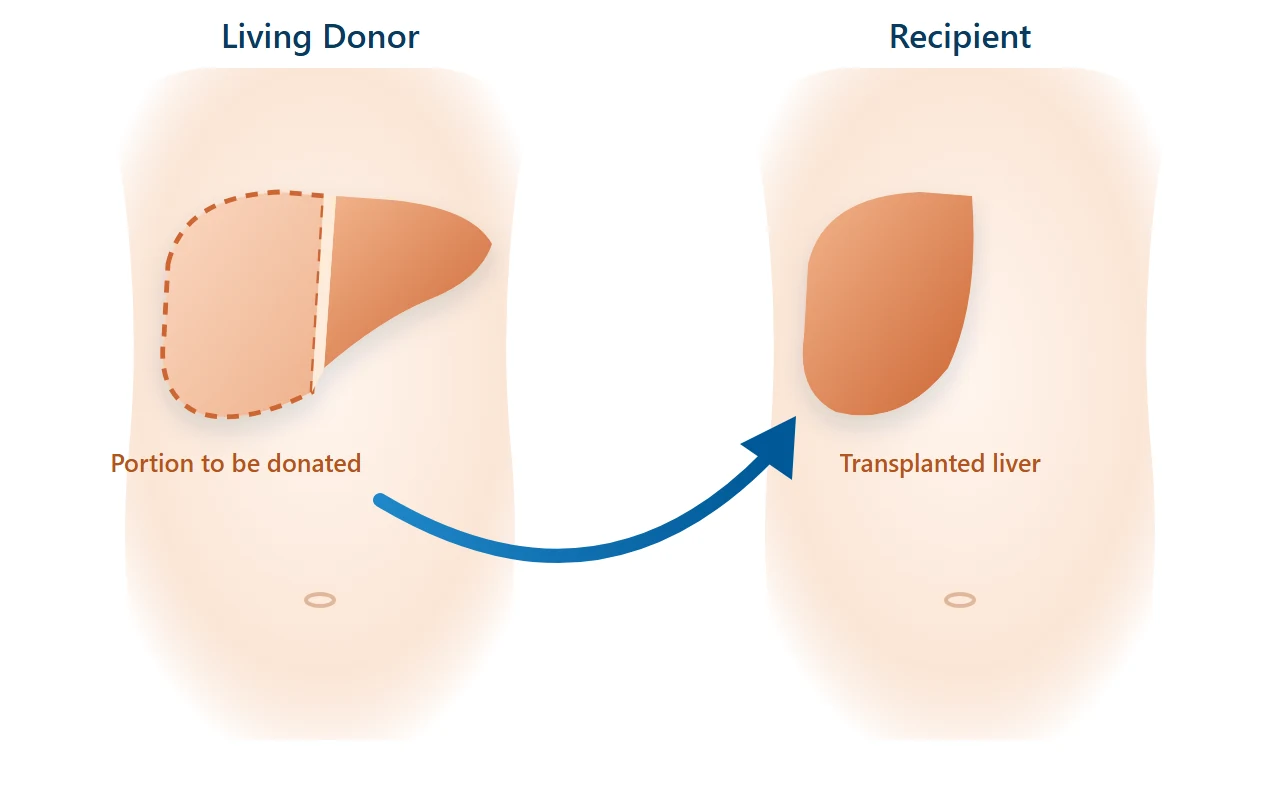
A liver transplant is a surgical procedure in which a diseased liver, or part of it, is removed and replaced with a healthy liver or segment of liver from a donor. In India, the majority of liver transplants for international patients are living-donor transplants, in which a surgeon removes a portion of a healthy donor’s liver — most commonly a close family member — and transplants it into the recipient. Both the donor’s remaining liver and the transplanted portion have the ability to regenerate over time. The donor and recipient undergo thorough, independent medical and psychological evaluation before the transplant is approved, and the recipient requires lifelong immunosuppressive medication afterward to prevent organ rejection.
2. Common Reasons Ghana Patients May Consider Liver Transplantation in India
Cirrhosis from Chronic Viral Hepatitis
Long-term hepatitis B or C infection can progressively scar the liver, eventually requiring transplantation.
Alcohol-Related Liver Disease
Long-term alcohol use can cause cirrhosis and liver failure requiring transplantation in selected, appropriately assessed patients.
Non-Alcoholic Fatty Liver Disease (NAFLD/NASH)
An increasingly common cause of cirrhosis and liver failure requiring transplantation.
Selected Liver Cancers
Certain liver cancers confined to the liver, meeting specific size and number criteria, may be treated with transplantation rather than resection alone.
Acute Liver Failure
Sudden, severe liver failure, sometimes from drug toxicity or acute hepatitis, may require urgent transplantation.
Biliary Diseases (Including Biliary Atresia in Children)
Conditions affecting the bile ducts can progress to liver failure requiring transplantation, including in infants and children.
3. Does Every Condition Need Surgery?
No. This is one of the most important principles for a Ghana patient considering travelling overseas. Depending on the stage and cause of liver disease, appropriate treatment may include:
- Medical management of the underlying liver disease before it progresses to failure
- Antiviral treatment for chronic hepatitis, which may prevent progression to cirrhosis
- Treatment of complications of cirrhosis (such as fluid retention or bleeding) without transplantation in earlier-stage disease
- Locoregional treatment or surgical resection instead of transplantation for selected liver cancers
- Careful monitoring for patients with compensated cirrhosis not yet in liver failure
Not every patient with liver disease requires transplantation. A hepatologist should confirm that liver disease has progressed to a stage genuinely requiring transplantation, using standardised scoring systems, and that the patient is medically fit for major surgery and lifelong immunosuppression.
4. When May Surgery Be Recommended?
- Liver function has declined to a stage of decompensated cirrhosis or liver failure
- A liver cancer meets recognised criteria for transplantation rather than other treatments
- The patient has been medically evaluated and found fit for major surgery and long-term immunosuppression
- A suitable living donor has been identified and cleared through independent medical and ethical evaluation
5. Warning Signs Ghana Patients Should Not Ignore
- Yellowing of the skin or eyes (jaundice) that is worsening
- Confusion or altered consciousness (which can indicate hepatic encephalopathy)
- Vomiting blood or passing black, tarry stools
- Rapidly increasing abdominal swelling
- High fever with abdominal pain
- Severe bleeding or bruising
A patient with confusion, vomiting blood, or signs of severe bleeding related to liver disease should seek immediate local emergency care in Ghana rather than delaying to arrange overseas treatment, as these can indicate life-threatening complications.
6. Ghana to India: Tests Usually Required Before Liver Transplantation
Liver Function Tests and MELD/PELD Scoring
Blood tests and standardised scoring systems used to assess the severity of liver disease and transplant urgency.
Imaging (CT/MRI/Doppler Ultrasound)
Assesses liver anatomy, blood vessels, and, where relevant, the size and number of liver tumours.
Donor Liver Volume Assessment
Specialised imaging to calculate the volume of liver the donor can safely donate while retaining adequate liver function.
Blood Group and Tissue Compatibility Testing
Confirms donor-recipient compatibility.
Donor Medical and Psychological Evaluation
A thorough, independent assessment to confirm the donor is healthy, a suitable match, and donating voluntarily without coercion.
Cardiac and Infectious Disease Screening
Assesses fitness for major surgery and screens for infections relevant to transplant safety.
7. Ghana to India: Major Aspects of Liver Transplant Surgery
Living-Donor Liver Transplant (Adult)
A portion of a healthy adult donor’s liver, typically the right or left lobe, is transplanted into the recipient.
Living-Donor Liver Transplant (Paediatric)
A smaller portion of liver, often from an adult relative, is used for transplantation into a child.
Recipient Transplant Surgery
The diseased liver is removed and replaced with the donor liver segment, with careful reconnection of blood vessels and bile ducts.
Deceased-Donor Liver Transplant
In selected circumstances, a deceased-donor liver may become available, though international patients generally rely on living-donor transplantation.
Retransplantation
In cases of graft failure or rejection, a repeat transplant may be required, carrying higher complexity and risk than a first transplant.
8. Living-Donor Liver Resection Technique
The donor operation to remove the appropriate portion of liver requires meticulous surgical planning based on detailed imaging, since both the donor’s remaining liver and the portion transplanted into the recipient must be large enough to function adequately. Some centres offer laparoscopic or minimally invasive donor surgery in appropriately selected cases, though open donor surgery remains standard at many centres.
9. Ghana to India: Transplant Hepatology and Critical Care Support
Advanced Indian liver transplant centres combine transplant surgery with dedicated transplant hepatology, liver ICU support, and access to interventional radiology for managing complications. A useful question for Ghana patients is not “How advanced is this hospital’s equipment?” but “How many liver transplants does this specific programme perform each year, and what are its actual one-year survival outcomes?”
10. Risks and Possible Complications of Liver Transplantation from Ghana in India
- Organ rejection (acute or chronic)
- Bleeding
- Bile duct complications, including leaks or strictures
- Blood clots in the liver’s blood vessels
- Infection, including opportunistic infections related to immunosuppression
- Primary graft dysfunction (the new liver not functioning adequately)
- Side effects of long-term immunosuppressive medication
- Recurrence of the original liver disease in some cases
- Risks to the living donor from the donor surgery itself, including a small risk of serious complications
Both recipient and donor risks should be discussed in detail. Living liver donation carries somewhat higher risk to the donor than living kidney donation, given the complexity of the donor operation, and donor safety should be a central, independently assessed part of the evaluation process.
11. Recovery After Liver Transplant from Ghana in India
Early Phase
- Intensive monitoring in a liver ICU immediately after surgery
- Monitoring of liver function and bile drainage
- Initiation and adjustment of immunosuppressive medication
- Monitoring for early rejection, bleeding, or bile duct complications
- Pain control
Following Weeks
- Gradual increase in activity
- Frequent blood tests to monitor liver function and drug levels
- Immunosuppressive medication adjustment
- Nutritional support and dietary guidance
- Infection-prevention precautions
Longer-Term Recovery
Recipients typically remain in India for six to eight weeks after surgery to allow the transplant team to confirm stable liver function, manage early complications, and establish an appropriate immunosuppressive regimen before international travel. Lifelong monitoring and medication are required indefinitely after a liver transplant.
12. Post-Transplant Support and Long-Term Management
- Structured immunosuppressive medication schedule
- Regular blood tests to monitor liver function and drug levels
- Nutritional rehabilitation, particularly important after prolonged liver disease before transplant
- Infection-prevention precautions, particularly in the early months
- Vaccination review, since some vaccines require adjustment after transplantation
- Long-term surveillance for recurrence and cardiovascular risk
13. Ghana to India: When Can Patients Return to Work?
Most liver transplant recipients can return to non-physical work approximately three to six months after surgery, once liver function is stable and the immunosuppressive regimen is settled, though this varies considerably based on individual recovery, the underlying disease, and occupation.
14. How Long Should a Ghana Patient Remain in India for Liver Transplantation?
The complete process, including donor and recipient evaluation, surgery, and initial recovery, typically requires a stay of six to eight weeks in India, and can take longer if complications arise. A Ghana patient and their donor should plan for this extended stay, including accommodation, daily living arrangements, and the possibility of an even longer stay if recovery is not straightforward.
15. Flying Back to Ghana After Liver Transplantation
- Fit-to-fly clearance from the transplant team, for both recipient and donor
- Confirmation of stable liver function and immunosuppressive drug levels
- Infection-prevention precautions for travel
- Hydration and mobility during the journey
- Medication supply and documentation for the trip
- Airport wheelchair assistance if needed
Both the recipient and the living donor need separate medical clearance to fly, since the donor has also undergone major surgery involving the liver.
16. What Medical Information Should You Take Back to Ghana?
- Discharge summary for both recipient and donor
- Complete operative reports
- Immunosuppressive medication protocol and dosing schedule
- Baseline post-transplant liver function results
- Imaging showing the transplanted liver’s vascular and biliary anatomy
- Infectious disease screening results
- Vaccination record and recommendations
- Follow-up and monitoring schedule
- Emergency warning signs of rejection or infection
- Transplant team’s contact details for follow-up questions
17. Follow-Up After Returning to Ghana
- Regular blood tests to monitor liver function and immunosuppressive drug levels
- Coordination between the Indian transplant team and a local hepatologist for lifelong care
- Infection monitoring, particularly in the first year
- Medication management and adjustment
- Long-term surveillance for disease recurrence and cardiovascular risk
- Clear plan for who to contact if signs of rejection or infection develop
18. How Successful Is Liver Transplant from Ghana in India?
There is no meaningful single “success rate” for liver transplantation that applies to every patient. Outcomes depend on the underlying liver disease, how unwell the patient is at the time of transplant, donor-recipient compatibility, and the quality of long-term follow-up care. A Ghana patient should ask a specific transplant programme for its own outcome data rather than relying on generic published statistics.
19. Questions Ghana Patients Should Ask Before Agreeing to Surgery
- Am I a suitable candidate for transplantation?
- Is my potential donor a suitable and safe match, and how much of their liver will be needed?
- What are the risks to me and to my donor?
- What is this programme’s annual transplant volume and survival outcome data?
- What happens if a living donor is not available or is found unsuitable?
- How long will the complete process take?
- What is the immunosuppressive medication regimen, and what are its side effects?
- How will my long-term follow-up be coordinated once I return to Ghana?
- What is the total cost, including donor evaluation and any complications?
- What happens if rejection or a complication develops after I return home?
Frequently Asked Questions: Ghana to India Liver Transplant
Can I bring my own donor from Ghana?
Yes, in most cases. The donor will need to undergo independent medical, imaging, and psychological evaluation in India before approval.
From Ghana, is living liver donation in India safe for my donor?
It carries real risks, somewhat greater than kidney donation given the complexity of the operation; donor safety should be a central, independently assessed part of any consultation.
Can I receive a deceased-donor liver in India as a foreign national?
Deceased-donor organs are generally allocated through national systems prioritising residents; most international patients pursue living-donor transplantation.
Will the donor’s liver grow back?
Yes, the liver has a notable capacity to regenerate, and both the donor’s remaining liver and the transplanted portion typically grow to an adequate size over weeks to months.
How soon can I fly back to Ghana after transplant?
There is no universal timeframe. The transplant team should confirm stable liver function and medication levels before clearing either the recipient or donor to fly.
From Ghana, will I need to take medication for the rest of my life after transplant in India?
Yes. Immunosuppressive medication to prevent rejection is a lifelong requirement after liver transplantation.
From Ghana, can my local hepatologist manage my care after I return home from India?
Often yes, in coordination with the Indian transplant team, though this should be arranged and confirmed before you leave India.
From Ghana, should I choose a transplant programme in India based on its technology alone?
No. Programme volume, actual survival outcome data, and the thoroughness of donor evaluation matter more than any single piece of equipment.
Key Takeaways: Ghana to India for Liver Transplant
Travelling from Ghana to India for a liver transplant is one of the most significant medical decisions a patient and their family will make. The most important steps are confirming genuine medical need for transplantation, ensuring thorough and independent evaluation of both patient and donor, understanding the realistic total timeline and cost, and establishing a clear, coordinated plan for lifelong immunosuppressive care and follow-up once back in Ghana. For a Ghana patient, choosing a transplant programme based on genuine volume and survival outcome data matters far more than the headline price.
Citation Block: Liver Transplant for Ghana Patients in India
Swipe to read more
| Field | Details |
|---|---|
| Article / Topic | Ghana — Liver Transplant in India: Complete Clinical & Surgical Guide |
| Primary Patient Group | From Ghana — patients in Ghana living with end-stage liver disease or selected liver cancers |
| Main Transplant Route | The majority of liver transplants for international patients are living-donor transplants |
| Common Reasons | Cirrhosis from Chronic Viral Hepatitis; Alcohol-Related Liver Disease; Non-Alcoholic Fatty Liver Disease (NAFLD/NASH); Selected Liver Cancers; Acute Liver Failure; Biliary Diseases (Including Biliary Atresia in Children) |
| Tests Usually Required | Liver Function Tests and MELD/PELD Scoring; Imaging (CT/MRI/Doppler Ultrasound); Donor Liver Volume Assessment; Blood Group and Tissue Compatibility Testing; Donor Medical and Psychological Evaluation; Cardiac and Infectious Disease Screening |
| Living-Donor Liver Transplant (Adult) | A portion of a healthy adult donor’s liver, typically the right or left lobe, is transplanted into the recipient. |
| Hospital Stay | 2–3 Weeks — Typical hospital stay for the recipient after surgery |
| Stay in India | Typically requires a stay of six to eight weeks in India |
| Key Decision Factor | From Ghana to India: confirming genuine medical need for transplantation, ensuring thorough and independent evaluation of both patient and donor |
| Documents to Take Back to Ghana | Discharge summary for both recipient and donor; Complete operative reports; Immunosuppressive medication protocol and dosing schedule; Baseline post-transplant liver function results; Imaging showing the transplanted liver’s vascular and biliary anatomy; Infectious disease screening results |
Sources
- National Institute of Diabetes and Digestive and Kidney Diseases (NIH), U.S. Government - Liver Transplant: https://www.niddk.nih.gov/health-information/liver-disease/liver-transplant
- MedlinePlus, U.S. National Library of Medicine - Liver Transplantation: https://medlineplus.gov/livertransplantation.html
- NHS, UK Government - Liver Transplant: https://www.nhs.uk/conditions/liver-transplant/
- Government of India - Ministry of Health and Family Welfare: https://www.mohfw.gov.in/